
Most moderation bots think of a punishment as a single row in a table: a user, a reason, a timestamp. But real moderation rarely fits in one line. New evidence surfaces. A second moderator adds context. The ban gets appealed, then lifted. A week later you realize this account is linked to three others.
In Archivian, a case is a living record that grows with all of that — and nothing gets scattered across channels, DMs, and screenshots.
Five case types, one consistent record
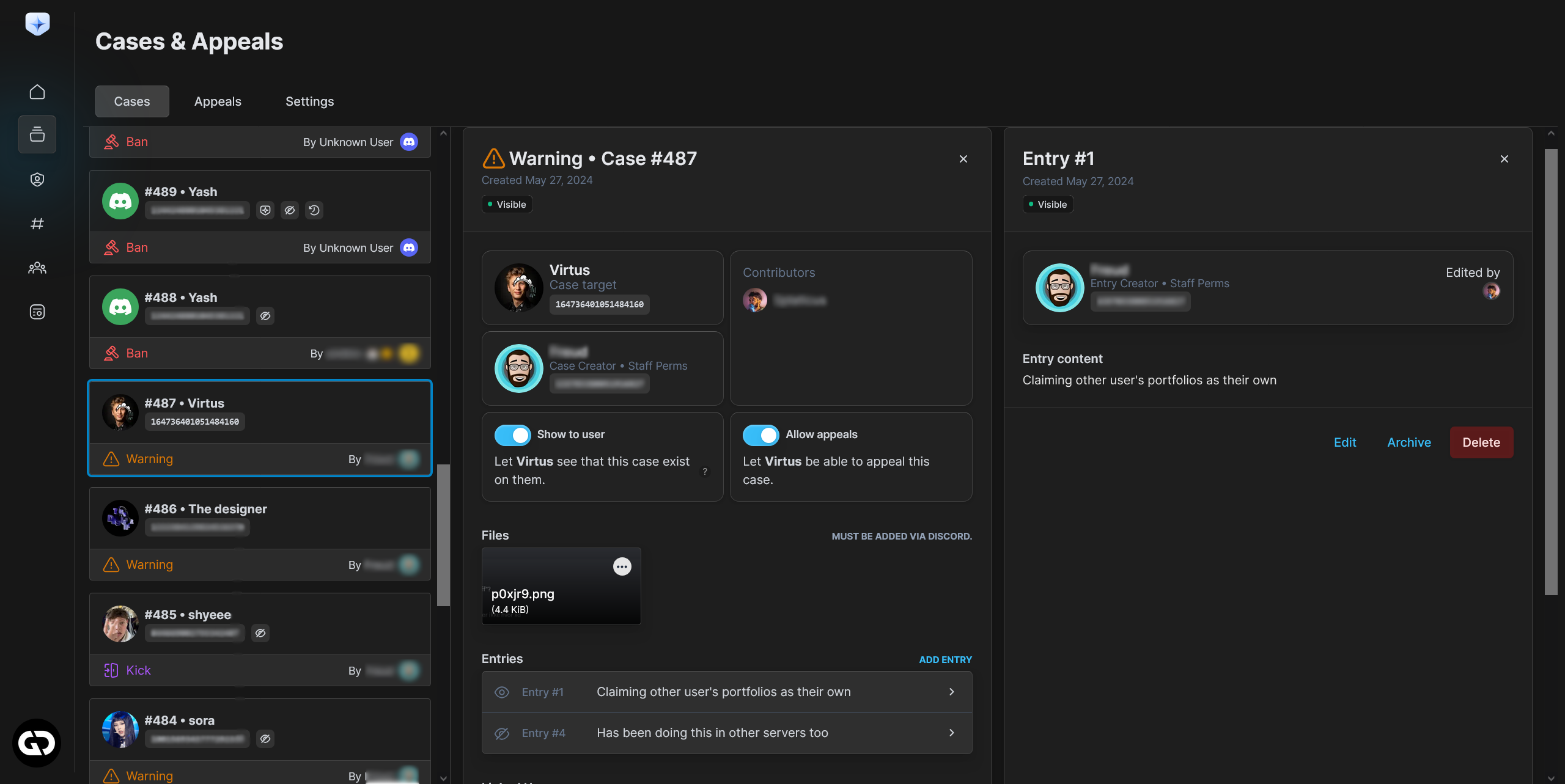
Every moderation action is a case: a Note, Warning, Timeout, Kick, or Ban. They all share the same rich structure, so your records look and behave consistently no matter the severity.
Timeouts use Discord’s native timeout feature rather than a legacy mute role, and reversals live in the right place: when you unban or lift a timeout, that’s recorded back on the original case as a tagged entry — no orphaned “unban” records floating around with no link to what they undo.
Build the record over time, together
A case isn’t frozen the moment it’s created. Staff add entries — each with its own author and timestamp — as an investigation develops.
Entries can be tagged for meaning — for example, marking one as the reason for an unban or unmute — so the case reads as a coherent story rather than a pile of notes.
Evidence that doesn’t die with a Discord link
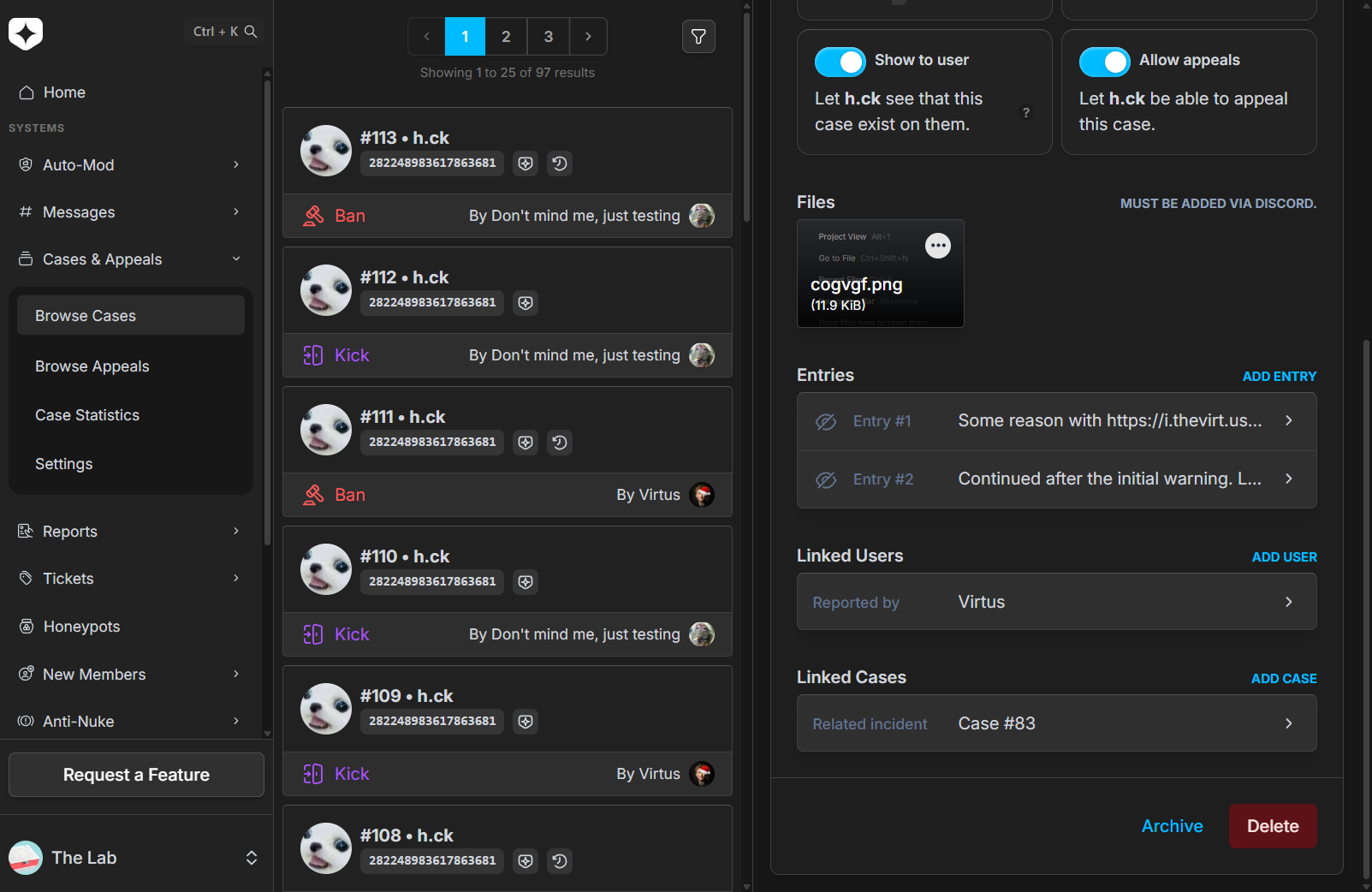
Screenshots and files attached to a case are hosted by Archivian — they’re first-class citizens on the case, not Discord CDN links that quietly expire.
Connect the dots between people and incidents
Moderation is relational, and Archivian treats it that way. You can:
- Link users to a case — a victim, a collaborator, an alt — each with a custom label you choose.
- Link cases to each other, bi-directionally, with any label that makes sense (“same raid”, “ban evasion of”, “related report”).
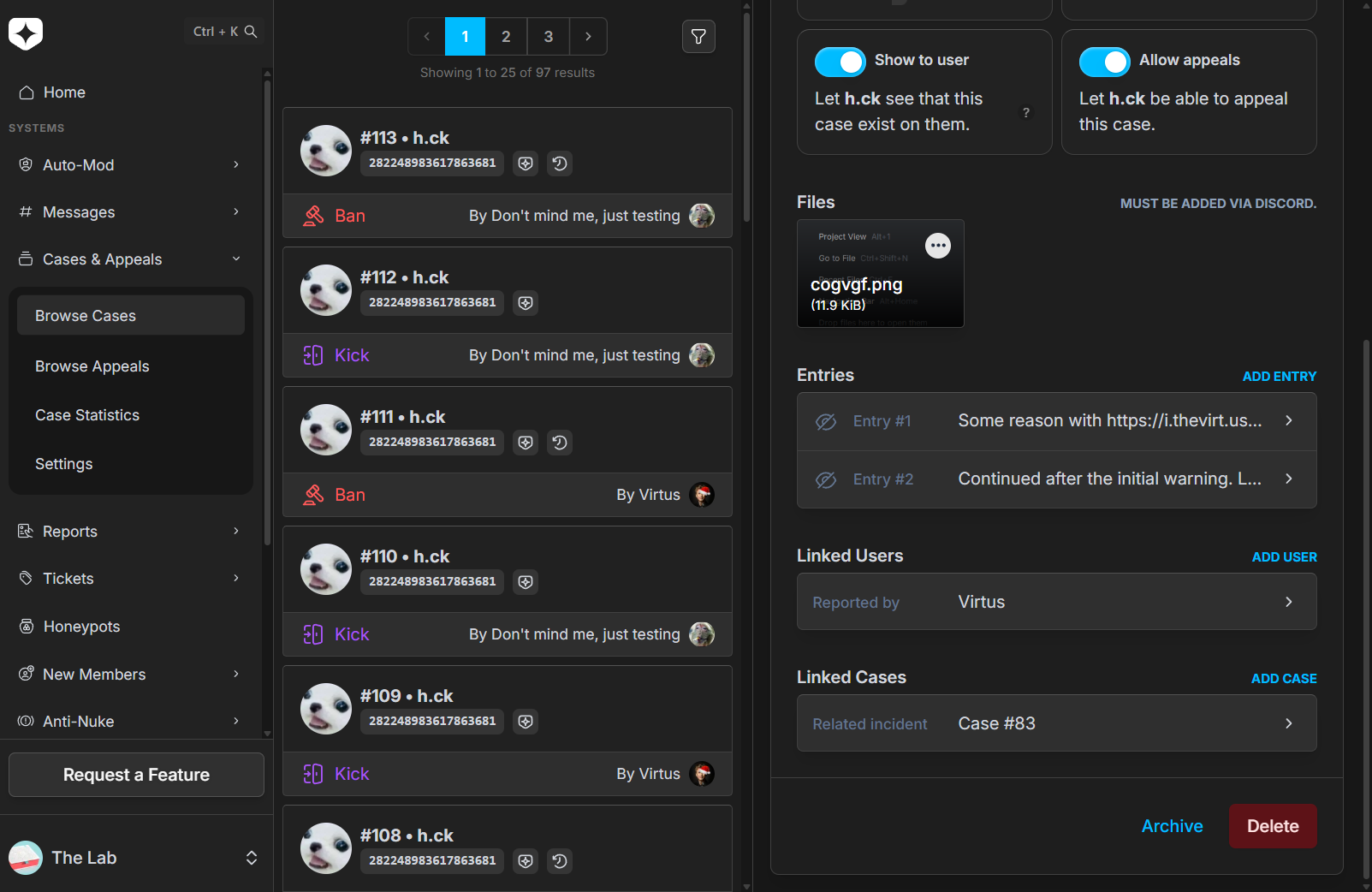
That relational context is something a flat log simply can’t express — and it’s what turns a list of punishments into an investigation tool.
You decide who sees what — down to the file
Visibility isn’t all-or-nothing. You can make a whole case public, or expose only specific parts of it — say, just the files you used as proof.
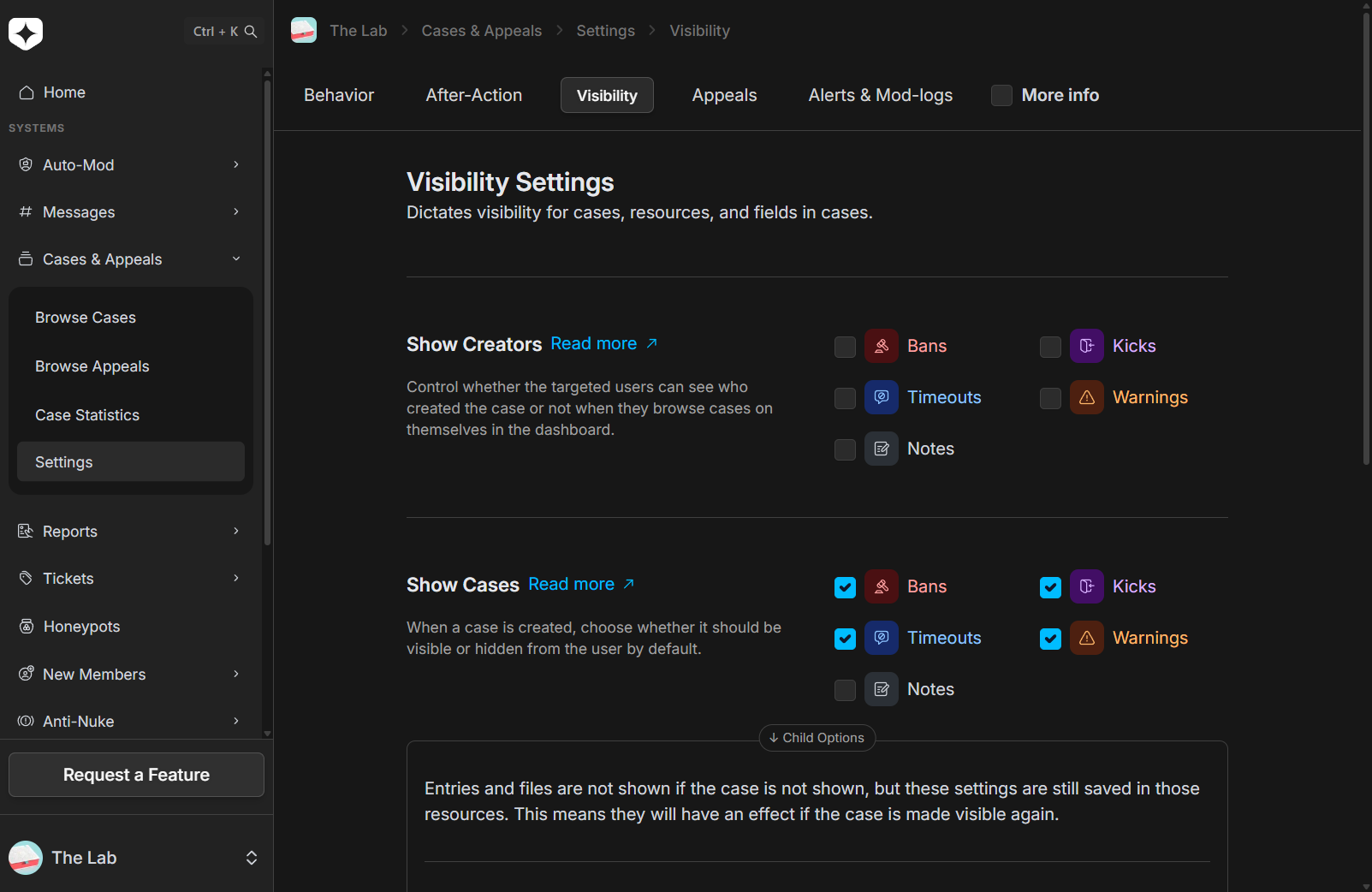
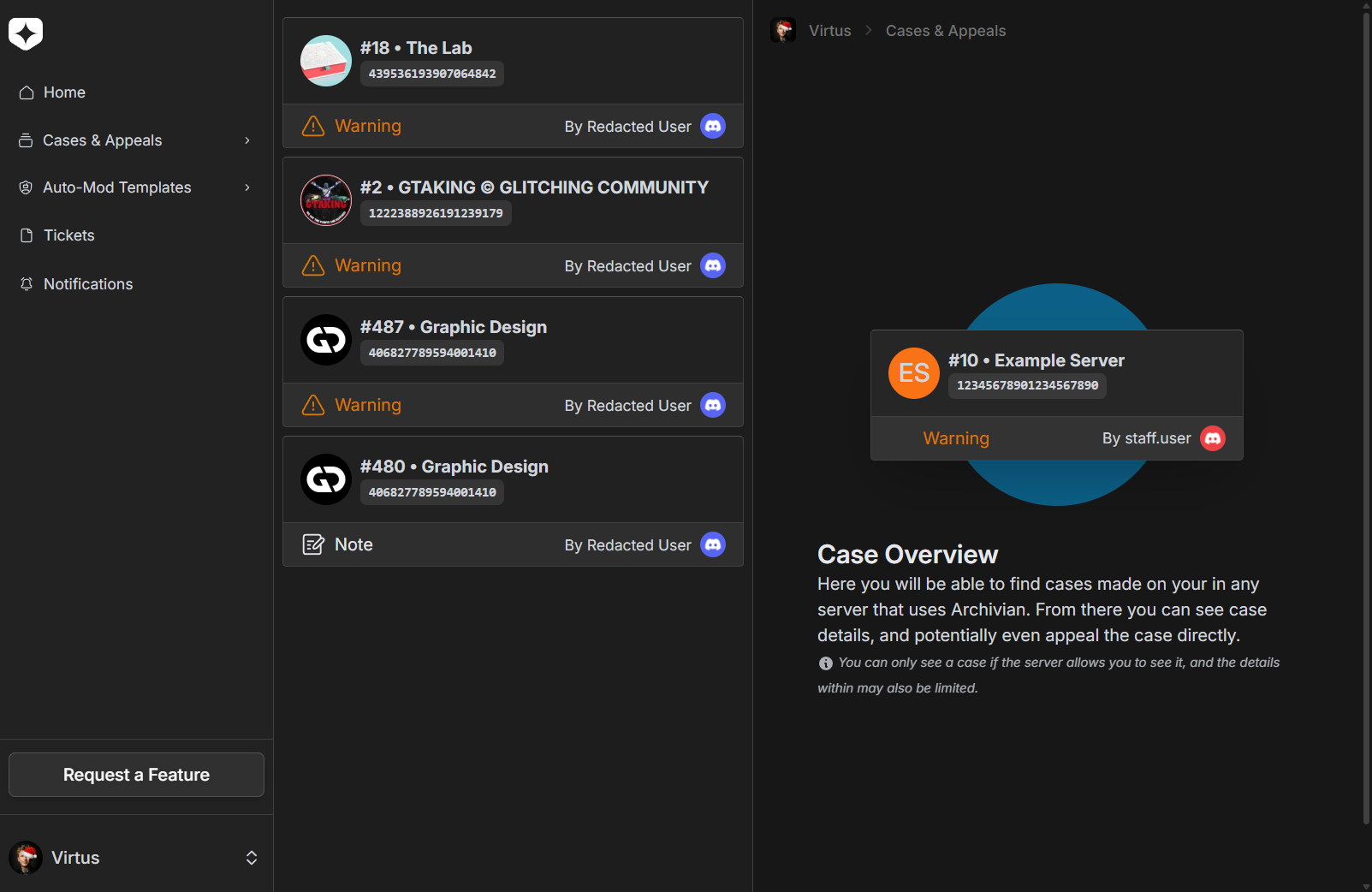
Visibility rules apply independently to cases, entries, files, and links — and where you allow it, users can browse the cases made on them right from their personal dashboard. (That’s also the on-ramp to appealing a case.)
Strict records, without the regret
Mistakes happen — a case made on the wrong user, a warning that turns out to be unwarranted. Archivian’s answer isn’t deletion.
Your records stay complete — even when staff don’t use Archivian
Not every action goes through Archivian’s commands, and that’s fine. Case interception watches for bans, kicks, and timeouts performed with Discord’s built-in tools or other bots and turns them into cases automatically, filling in whatever it can (executor, target, reason).
And when you’re dealing with a raid, the dashboard’s mass actions let you ban, kick, or time out many users at once — while still producing proper case records for every one of them.
Why it matters
A static modlog answers “what happened?” with a single sentence and hopes you never need more. A case that evolves answers “what happened, who was involved, what’s the proof, what did we decide, and what changed since?” — and keeps answering it for as long as you keep the case.