
There’s a move every moderator has seen: someone posts something rule-breaking, then edits it to “nvm” and deletes it three seconds later. By the time you look, the evidence is gone — and a logging bot that only keeps a text diff in memory has nothing to show you, especially after its cache reset on the last restart.
Archivian is built so that the moment a message exists, it’s already preserved on Archivian’s side — content, edits, embeds, and attachments included.
It remembers what the message used to say
Archivian stores message content, its full edit history, and deletion records — not a volatile cache that empties on restart. That means old and deleted content is reliably there when you need it.
It even catches the sneaky case: content removed via an edit, not just an outright delete. If someone edits the incriminating part out of a message, that’s tracked the same way a deletion is.
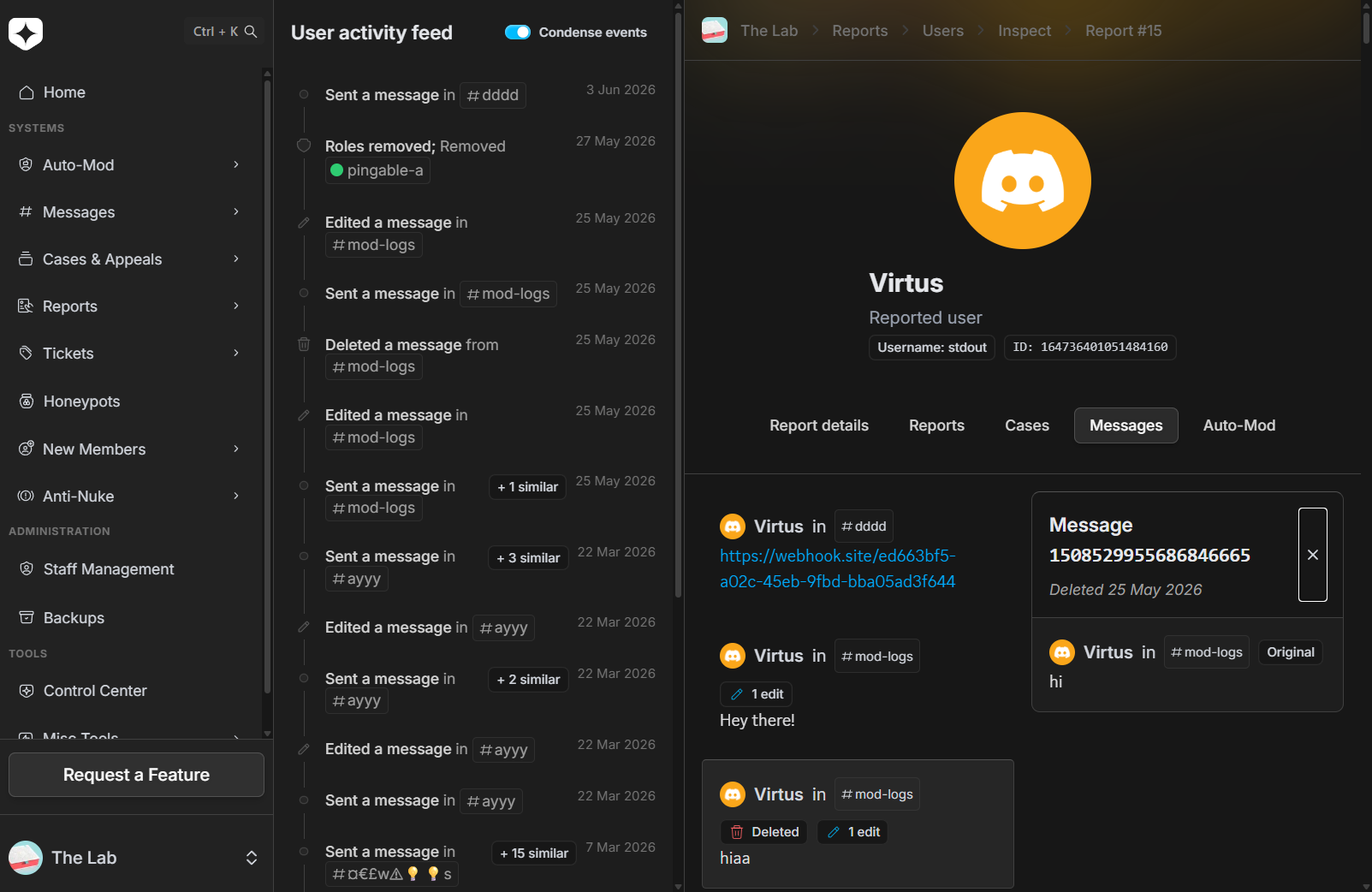
Deleted attachments don’t have to be gone
This is the one that surprises people. Files posted in your server are automatically stored for up to two weeks — so when someone posts an image and instantly deletes it, you can still open it.
A file is posted
Archivian quietly stores attachments sent in your server, holding them for up to two weeks.
It gets deleted
Whether it was a mistake or a deliberate hit-and-run, the file vanishing from Discord doesn’t delete Archivian’s copy.
You review it from the dashboard
Browse deleted files right in the dashboard — and where appropriate, permanently delete a stored file from Archivian’s storage yourself.
Edits and deletions of embeds and files are tracked too — with their own dedicated alerts — not just message text, which most bots ignore entirely.
Bulk deletions become something you can inspect
When messages are purged in bulk, they usually disappear in one irrecoverable sweep. Archivian instead captures the whole set as a browsable collection you can open and inspect later.
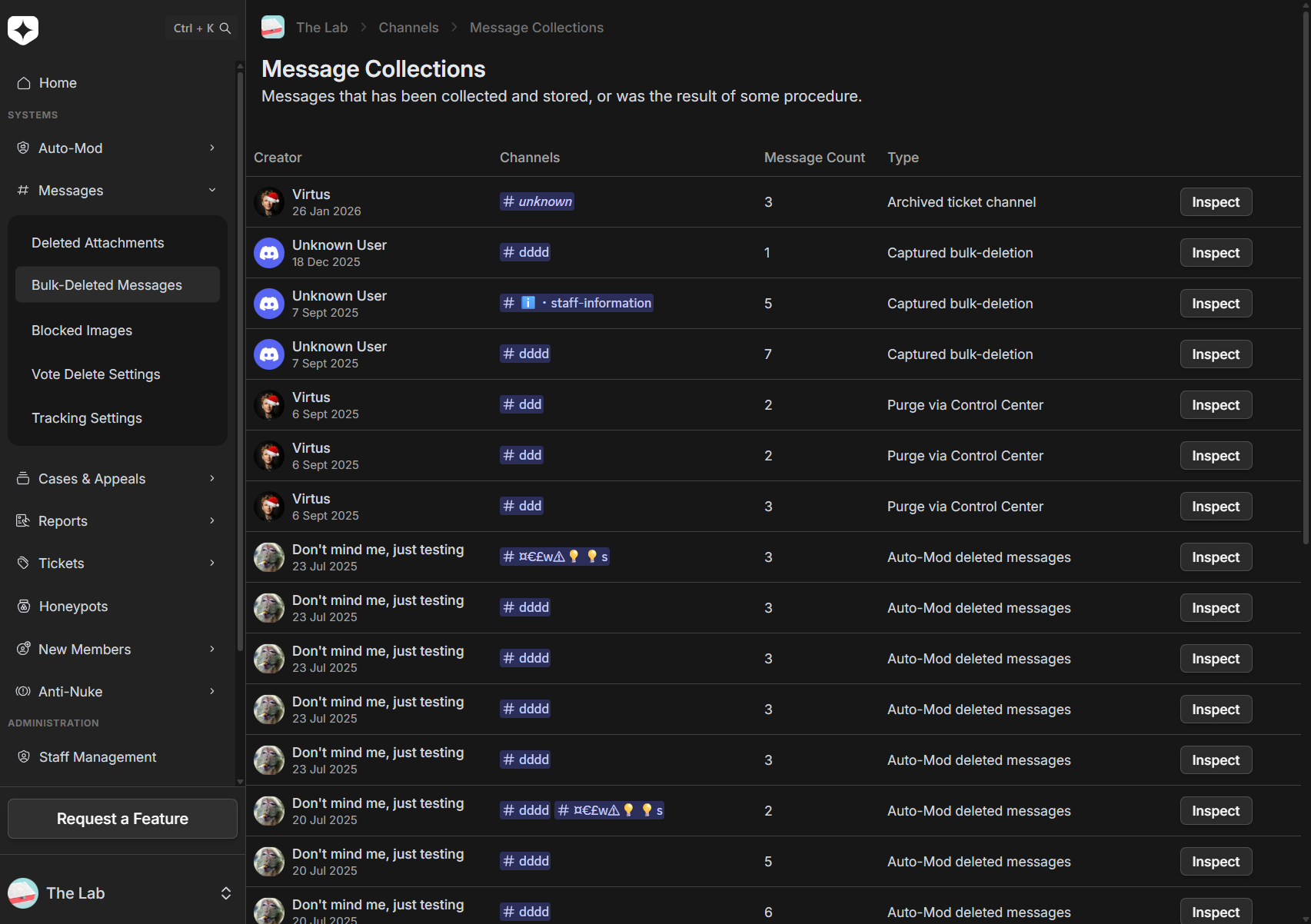
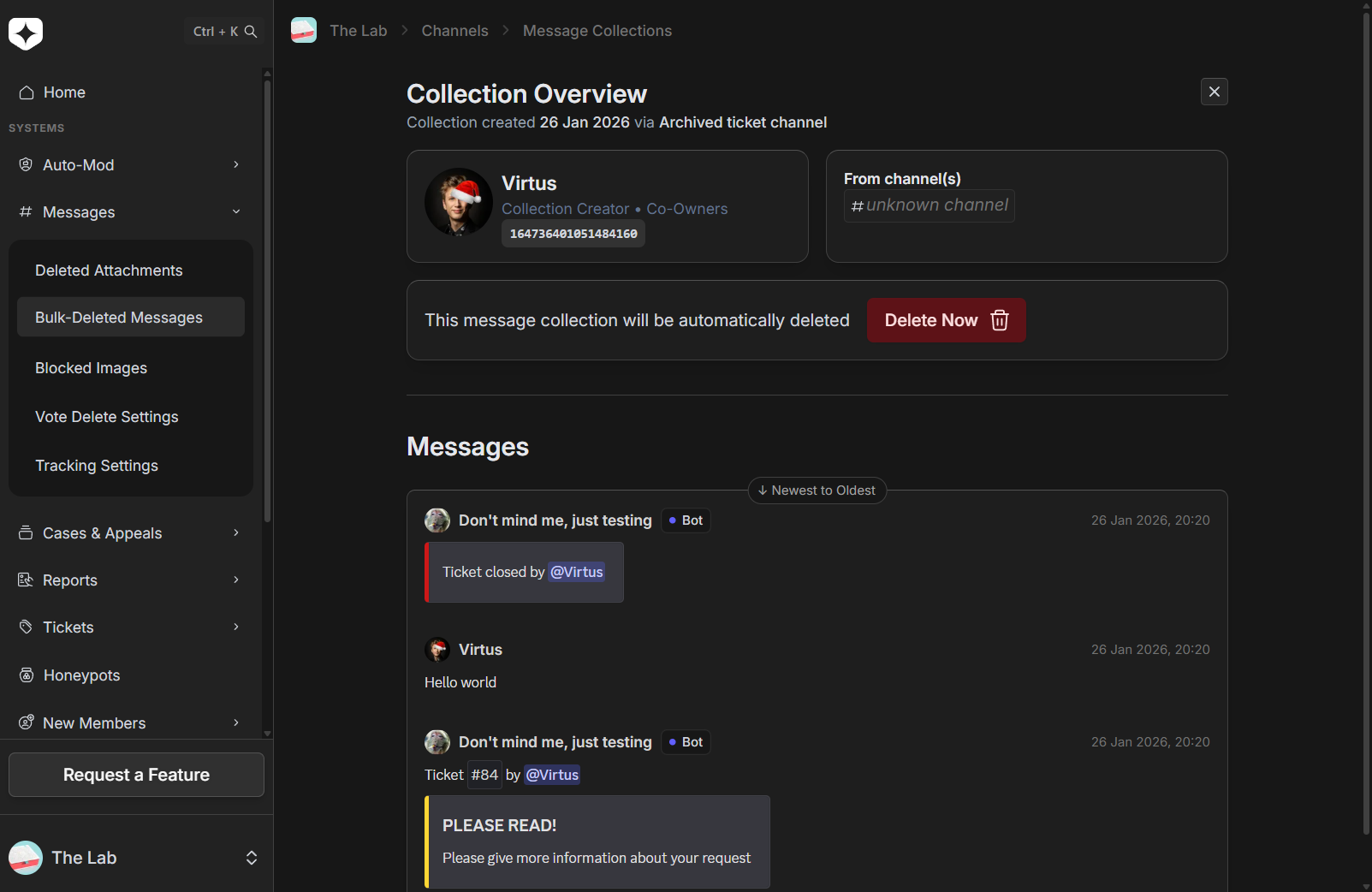
And when you’re the one doing the cleanup, purge with preview lets you dry-run a purge and see precisely which messages it will remove before you commit.
Tuned to your server, not one-size-fits-all
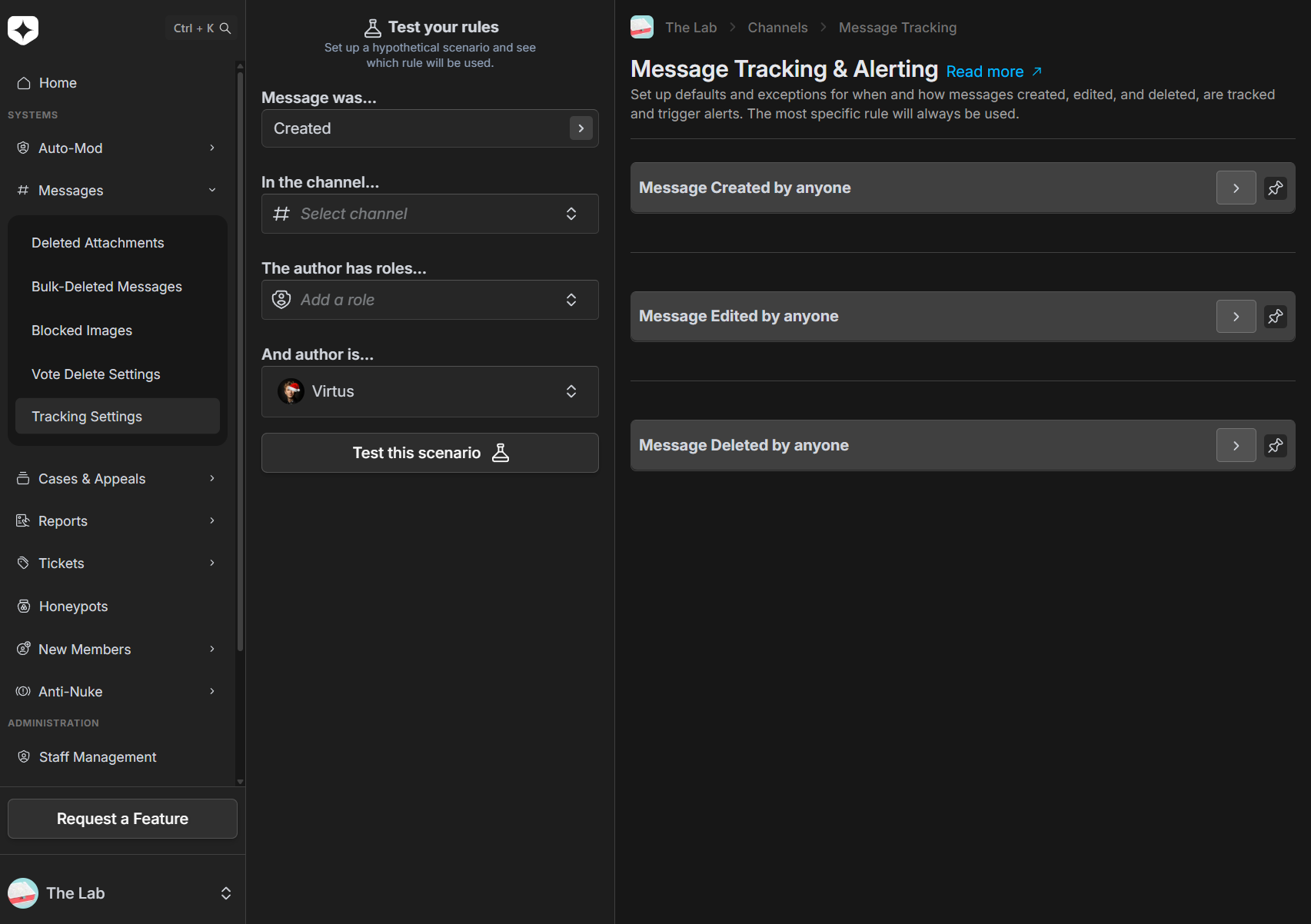
You’re not stuck with a single retention setting. Message tracking has granular retention policies configurable per channel, so you can keep more where it matters and less where it doesn’t.
Why it matters
Evidence is only useful if it’s still there when you go looking. By persisting messages, edits, embeds, and attachments the instant they appear — and holding deleted files for two weeks — Archivian turns “you had to be there” into “let me pull that up.”